Showing posts with label CS. Show all posts
Showing posts with label CS. Show all posts
Wednesday, April 13, 2011

Paradise Lost
Honolulu now faces a problem with homelessness. about 100 tents are set up in the downtown area and are occupied by homeless families. Hawaii government is now kicking them out and forcing them to find a new place to live. However, this method does not solve the problem. In a N.Y. Times article, Doran J. Porter explains the problem:
Kciking the homeless out of Honolulu will only force them to set up there tents somewhere else. Instead of taking this ineffective approach, the government needs to implement effective programs that will successfully accomodate the homeless. The newly elected governer has already hired a homeless coordinator, and important step in the fight agaisnt homelessness. Only after the government makes choices that will permanently end this problem rather than ignore it can the issue truly be remedied.And Mr. Porter said he knew full well that state officials were under pressure from the business community. “My concern is that they need to have solutions of where these folks are going to go,” he said. “We can’t keep kicking them out of one place where they go to another. That’s why they are there in the first place: they were kicked out of Waikiki and the beaches. This has been going on for years.”

Women Veterans Face Homelessness
Thousands of Iraq and Afghanistan veterans are joining over 100,000 veterans of other generations living on the streets and in shelters. Preliminary data from the VA suggest that Iraq and Afghanistan veterans make up 1.8 percent of the homeless veteran population. As of September 2009, more than 3,700 Iraq and Afghanistan veterans have already been seen in the Department of Veterans Affairs' homeless outreach program. Of homeless Iraq and Afghanistan veterans, more than 10 percent are women. Not all homeless Iraq and Afghanistan veterans use VA services however, so the real number of homeless Iraq and Afghanistan veterans may be considerably higher. In addition, because the homeless population is transient, and because many people may experience homelessness off and on over months or even years, correctly measuring the homeless population is difficult.
Last Minute Push Keeps Poverty In Check
Recently in New York, there have been fears that many more people would fall into poverty due to the recession. Currently 19.9% of the city's population lives in poverty. Without a flood of food stamps and tax benefits for low-income families, about 250,000 more New Yorkers would have fallen into poverty. Many people feel that most poverty aid programs are ineffective but in reality, some are essential to preventing more poverty. The Center for Economic Opportunity explains further in this article:
It is essential to identify and expand on successful programs such as this recent one to maximize effective aid to those in need. If unnecessary programs are cut and the money is allocated more efficiently to more effective programs, poverty and homeless levels could be drastically reduced.Not every antipoverty program meets its goals and deserves to be protected,” the report by Dr. Mark Levitan, the center’s director of poverty research, says, “but calls for across-the-board cutbacks to programs that help low-income families cannot be justified by the assertion that when it comes to poverty, ‘nothing works.
The Long Road to Eliminating Homelessness
The Long Road to Eliminating Homelessness
Part I:
America is known as the land of the free and the home of the brave, a beacon of hope to many. One of the reasons so many people immigrate to the United States is the promise of the “American dream”, the chance to live a better life. However, it is not as easy as it seems to live a successful life in the U.S. today. Homelessness has become an increasingly apparent issue in our country as more and more people are forced to live on the streets. It is estimated that around 3.5 million Americans are likely to experience homelessness in any given year.[1] A variety of factors lead to homelessness such as poverty and high housing prices. A surprisingly large portion of the population is subject to homelessness. In fact, in 2005, 13.3% of the U.S. population, or 38,231,521 million people, lived in poverty. Both the poverty rate and the number of poor people have increased in recent years, up from 12.5% or 1.1 million in 2003.[2]
Especially in times such as these with a weak economy, it is understandable that poverty rates would be up. With companies laying off employees, many people are left with no source of income. Even with a job, many working people cannot support themselves on low income. In fact, a survey of 24 U.S. cities found that 13% of persons in homeless situations are employed.[2] A recent U.S. Conference of Mayors report stated that, in every state, more than the minimum-wage is required to afford a one or two-bedroom apartment at 30% of his or her income, which is the federal definition of affordable housing.[2] These conditions mean that homelessness is now a more prevalent problem than ever.
Even more troubling is the fact that now more families and children under 18 are being affected by homelessness. When parents can no longer afford to support their family, children are forced to adjust to a life living on the streets or in shelters too. According to data released by the Urban Institute in 2000, children make up about 39 percent of the homeless population nationally.[1] The fact that so many children are affected by homelessness is especially troubling because this does not set them up for a successful life. Children who are homeless are more likely to drop out of school and therefore end up unemployed in the future. Furthermore, homeless youth are at a higher risk for anxiety disorders, depression, post-traumatic stress disorder, and suicide.[3]
In addition to the increase of homeless youth, more elderly people are now becoming homeless now. Ellen O’Brien, a senior strategic policy advisor at the Public Policy Institute of AARP, stresses that due to the focus on homeless youth, “The fact that 3.7 million older adults do not have sufficient cash income to meet their basic expenses too often escapes attention”.[4] While homelessness is one of the most pressing issues facing our nation, there are various programs dedicated to helping those in need.
Part II:
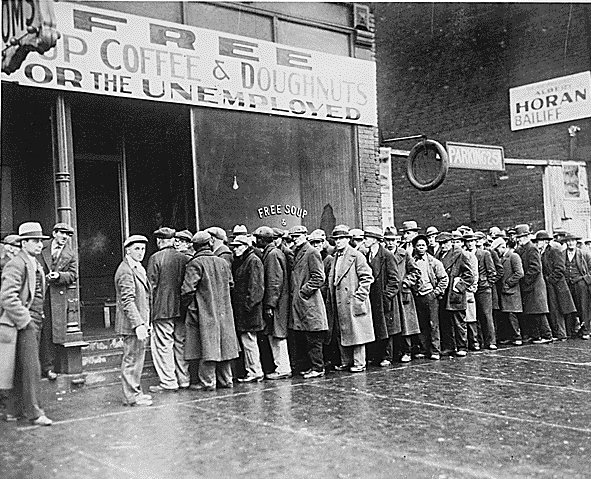
Because homelessness is so prevalent in our nation, the government has implanted many programs aimed at helping those who live in poverty or on the streets. Homeless shelters and soup kitchens are common in inner cities highly concentrated with homeless people. The government funds many shelter organizations that take an involved stance in reversing homelessness. When homeless people seek help at a shelter, most are encouraged to take an active approach in becoming self-sufficient. These programs are especially important in lowering homeless rates because they can help rehabilitate unemployed homeless people. Soup kitchens offer free meals to those in need and are essential in aiding the homeless or people living in poverty. I worked at the Bay Area Rescue Mission in Richmond and served lunch. Around twenty people came in to eat a meal which, according to the coordinator, was a slow day. Food banks are also an effective way that the government is helping the issue of homelessness. Food banks such as the Food Bank of Contra Costa and Solano receive food donations both from people and companies. They then sell these food items to soup kitchens at significantly reduced price. Since it is a non-profit organization, the food bank only makes enough profit to cover the costs of running their business.
The government also protects unemployed people through Unemployment Insurance. Unemployment insurance works by providing states with strong incentives to supply their own insurance programs to citizens. This insurance “is funded by a combination of revenues collected through the national tax on employers, state taxes on employers and a portion of workers' payroll taxes. All contributions to state unemployment funds must be deposited into a national unemployment trust fund maintained by the Treasury Department. Each state can withdraw money from the fund at any time to pay unemployment benefits.”[5] Another method the government is testing is the “Housing First” method. This strategy targets the chronically homeless and gives them their own apartment and access to social workers as a way to get them out of the street. According to the U.S. Department of Housing and Urban Development (HUD), a chronically homeless person is one with a "disabling condition" that can be physical or mental, or someone with an addiction to drugs or alcohol, and who has been homeless for at least a year or three times within the past three years.[6] While this method is effective in helping the chronically homeless, they are actually a minority of the entire homeless population.
One of the main ways the government is attempting to cut down on homeless levels is through welfare checks. The welfare system in the United States is designed to provide needy families with enough income to survive until they can find a steady source of income. The current program, called Temporary Assistance to Needy Families (TANF), is a block grant program from the government. However, welfare does not always provide relief from poverty because “current TANF benefits and Food Stamps combined are below the poverty level in every state; in fact, the current maximum TANF benefit for a single mother of two children is 29% of the federal poverty level”.[7] It is clear that while many of the programs that the government have implemented to aid the homeless are essential, many are in need of reform to correctly address the issue.
Part III:
Homelessness is possibly the most widespread issue that our nation faces on the home front today. With such a large percentage of the population affected by homelessness, it is crucial that this issue is addressed in the most effective way possible. The main problem with most government implemented programs is that they are inefficient. While it is clear that all programs aimed at helping the homeless help a portion of the population, they are worthless to other parts of the population and even detrimental to some. The key is to identify which programs are the most successful and expand on those while cutting programs that are unnecessary or inefficient. For example, the “Housing First” strategy is very effective for certain groups but it does not appeal to a large enough group to be worth it. While many people may benefit from this program, as a whole it is inefficient. In fact, a survey published by USA Today in October 2008 says that in New York City, 2,747 families applied for shelter in September 2007, an increase from the 2,087 who applied the previous September.6
However, it is not always easy to identify which programs are successful. Due to inaccurate methods of measuring homelessness, data tends to be slightly erroneous. For example, one method of measuring homelessness is through eviction notices, but analyses in New York showed that only one in five welfare families facing eviction actually became homeless.[8] Therefore it is also necessary for the government to reform their methods for measuring homelessness to be more accurate. If the programs are evaluated with flawed statistics, then it is impossible to know which programs are truly successful and which are ineffective.
In order to better aid the homeless, it is important that the government expands programs that have already shown success. TANF was implemented after the Aid to Families with Dependent Children (AFDC) program was cut following the Personal Responsibility and Work Opportunity Reconciliation Act of 1996. The previous program supplied better aid to those in need and homeless levels have increased since its departure.7 To fully remedy the problem of homelessness, the government should be cutting only unnecessary programs and keeping those that provide effective aid.
One of the most helpful things the government could do to improve this issue is to not only expand successful programs, but fix any flaws with them. In an interview, a homeless man named Jesus Rodriguez explained that he does not like shelters because “they and their friends say they have been robbed, attacked, or gotten sick. But they said they would much prefer to live in their own apartment and hope to get subsidized housing soon.” [9] If the government focuses on fixing problems with successful programs, they become even more successful and the homeless levels can be drastically reduced.
Perhaps the most effective method the government could make use of to lower homeless rates is to address the problem at its source. Poverty is the main cause of homelessness so it is important to focus on creating and expanding programs that prevent people from becoming homeless in the first place. Since minimum wage is not enough income to support a family7, raising minimum wage nationally could provide a beneficial effect to the point where other programs would later become unnecessary and could be cut. Furthermore, programs designed to help low income families pay for housing or an overall reform to housing costs could drastically cut down on poverty levels and therefore homelessness.
From working in food banks and soup kitchens, I saw firsthand the power that volunteering has. By volunteering and supporting programs that help those in need, it is possible to make a difference. Organizations such as the Food Bank of Contra Costa and Solano or Bay Area Rescue Mission are dedicated to helping homeless people or those living in poverty and by supporting them I feel that I also made a stand against homelessness as a whole. I was always aware that there were a vast amount of homeless people in our country but, living in a sheltered neighborhood like Lafayette, the force of this issue never really hit me. By traveling into poorer neighborhoods and working with fellow volunteers to help the homeless I realized just how close these people were to me. The whole experience of volunteering changes the endless statistics and percentages into real people. From seeing the hardened families coming into the soup kitchen just to get a hot meal, the issue of homelessness became something a lot more tangible to me. While the government can choose which programs to implement and which to cut, it is the volunteers that support these programs that make the real difference.
[1] Romeo, Jim. "Homelessness in America Is a Growing Problem." Gale Databases Opposing Viewpoints In Context. 2009. Web.
[2] "Homelessness Is Caused by Poverty and a Lack of Affordable Housing." Poverty and Homelessness. Detroit: Greenhaven Press, 2009. Current Controversies. Gale Opposing Viewpoints In Context. Web.
[3] "Youth Homelessness Is a Serious Problem." Youth Homelessness Series Brief No. 1 (May 2006). Rpt. in Poverty and Homelessness. Ed. Noël Merino. Detroit: Greenhaven Press, 2009. Current Controversies. Gale Opposing Viewpoints In Context. Web. 13 Apr. 2011.
[4] O'Brien, Ellen, Ke Bin Wu, and David Baer. "Poverty Among the Elderly Is Widespread in America." Gale Opposing Viewpoints in Context. 2011. Web.
[5] . "Unemployment Insurance." Issues & Controversies. Facts On File News Services, 15 Nov. 2010. Web. 12 Apr. 2011. http://www.2facts.com/article/i1500630
[6] "Chronic Homelessness." Issues & Controversies On File: n. pag. Issues & Controversies. Facts On File News Services, 14 Nov. 2008. Web. 9 Apr. 2011. http://www.2facts.com/article/i1300630
[7] "Homelessness Is Caused by Poverty and a Lack of Affordable Housing." Poverty and Homelessness. Ed. Noël Merino. Detroit: Greenhaven Press, 2009. Current Controversies. Gale Opposing Viewpoints In Context. Web. 12 Apr. 2011
[8] Burt, Martha R., Carol L. Pearson, and Ann Elizabeth. Montgomery. Homelessness: Prevention Strategies and Effectiveness. New York: Nova Science, 2007. Print.
[9] David Abel. (2011, January 31). “Harsh life under the Zakim Bridge :Wary group shuns homeless shelters”. Boston Globe,p. A.1
Tuesday, March 29, 2011
Poverty Wisespread in the Elderly
There's no doubt that poverty and homelessness is a growing problem in America. However, it appears that poverty is especially evident in elderly people. Nearly one in adults over the age of 65 live in a family with income below the official U.S. poverty line. Twenty percent of older adults who are black or Hispanic are poor, and poverty hits people with limited education and those who are not married especially hard. In an article by AARP, experts discuss this issue.
The main reason that so many elderly are forced into poverty is due to the unaffordable cost of housing. After retiring, people no longer have a steady source of income high enough to pay for necessities. Along with medication many elderly people have to buy, it's no wonder that so many old people are on welfare checks. This is not a problem that we can solve easily but with the right programs, the government can help alleviate this issue.The fact that 3.7 million older adults do not have sufficient cash income to meet their basic expenses too often escapes attention. By most accounts, elderly poverty is a problem we have largely solved. Since 1968 the poverty rate among adults age 65 and older has declined by about a third, falling from 25 percent in 1968 to 9.7 percent in 2008. In contrast, poverty among younger adults, and especially among children, has risen in recent decades even as a national prosperity, real gross domestic product per capita, has grown. But poverty-particularly poverty among the elderly- is mismeasured and poverty rates are still unacceptably high, especially for certain groups of older Americans.
Wednesday, March 9, 2011
A Day in the Life
As part of a project started by three recent college graduates who are interns at the BBH advertising agency, four homeless persons were given cell phones and asked to tweet about their daily routine to twitter. Derrick Wiggins, 44, posts about a dozen updates to twitter every day, offering a glimpse into the life of a homeless man in New York.
These sobering messages allow his 3,800 followers to better understand the situation many homeless people are in. When Wiggins couldn't pay the rent for his last apartment, he stayed with a friend before becoming fully homeless. Although his situation is unfortunate, he manages to stay upbeat, much to the credit of his followers who offer him encouragement. This experiment makes even more clear the importance of doing whatever is possible to help those in need.“The trains are warm and clean, a suitable refuge from the cold,” read a message posted at 9:13 a.m. He posted a photograph he snapped with his phone, of a homeless man sleeping on the subway, behind a shopping cart full of belongings.
“Who’s son, brother, uncle or father is he? What services are available?” Mr. Wiggins wrote.
Is Poverty Up or Not?
By the traditional non-experimental measure, poverty jumped to 14.3 percent in 2009 from 13.2 percent in 2008. This measure, however, does not include the value of in-kind benefits, such as food stamps (under the Supplemental Nutrition Assistance Program), tax benefits such as the Earned Income Tax Credit, and some other government programs that received a special boost from the federal stimulus put into effect in 2009.Fortunately, this suggests that poverty levels were impacted as much as it seemed from the recession.
Most of these measures indicate little if any change between 2008 and 2009, indicating that public antipoverty programs did their job pretty well.She explains that the unofficial, experimental measures take many more factors into effect and are therefore more accurate. In any case, it is clear that poverty is still on the rise. More and more families are sinking into poverty and unemployment is still high. That is why it is important to support anti-poverty programs and volunteer. Hopefully in the near future poverty levels will begin to fall and our country can ultimately heal.
Wednesday, February 16, 2011
Homeless Left Out in the Cold
When the city's coldest night approached in Newark, homeless people had to take refuge anywhere warm they could find. Some chose to travel elsewhere to avoid the cold. Temperatures dropped to 13 degrees which enacted the cities "code blue" program.
While shelters were available for the homeless to stay in, many remarked that they don't like the shelters as much as fending for themselves. During times like this, the issue of homelessness becomes especially apparent. Although it's clear that something has to be done, it's also important to make sure that any government are effective and helpful to ensure government spending does not increase too much.Teams of outreach workers checked on street dwellers every two hours under the department’s “Code Blue” procedure, which goes into effect when the temperature or wind chill drops below freezing and is heightened when the readings fall below 20 degrees, according to Mr. Diamond.

Rising Food Prices Means Rising Poverty Levels

The bank’s price index soared 29 percent from January 2010 to January 2011 (15 percent just from October to January). Wheat, maize, sugar and edible oils have seen the sharpest price increases in the last six months, with a relatively smaller increase in rice. The rising prices have increased the vulnerability of economies, particularly those that import a high share of their food and have limited capacity for government borrowing and spending.In hard economic times like now, it's important to try to keep prices as stable as possible. The article suggests taking measures to "calm jittery markets" such as making investments in raising environmentally sustainable agricultural productivity, better risk-management tools, less food intensive biofuel technologies, and climate change adaptation measures. It is important to do whatever possible to make sure that this problem doesn't cause a more drastic level of poverty.
Counting the Homeless
 It's no secret that homelessness and poverty is an issue that affects the U.S. as a whole. Recently, people gathered in San Francisco to help with the biannual homeless census. In order to receive funds from the Department of Housing and Urban Development, the city needs a number of how many homeless people are living there. The people walked the streets and counted the homeless resulting in $18 million from HUD. In an interview with the N.Y. Times, mayor Edwin M. Lee reported on the growing issue of homelessness in San Francisco.
...the numbers were rising because San Francisco was a national destination for the down and out. “People come to San Francisco for a lot of different reasons, including the weather and our success in providing services,” Mr. Lee said.Although no numbers were released in the article, in 2009 San Francisco’s homeless count found 6,514 homeless, including 2,709 people literally sleeping on the street, 1,516 in emergency shelters, 394 in jail and 98 in hospitals and clinics. It is clear that this is a serious issue, but there is no easy solution. For now, the best we can do is to provide the best services we can.
Subscribe to:
Posts (Atom)